Image could not be loaded. You can still follow the written recipe below.
Spinach Garlic Noodles
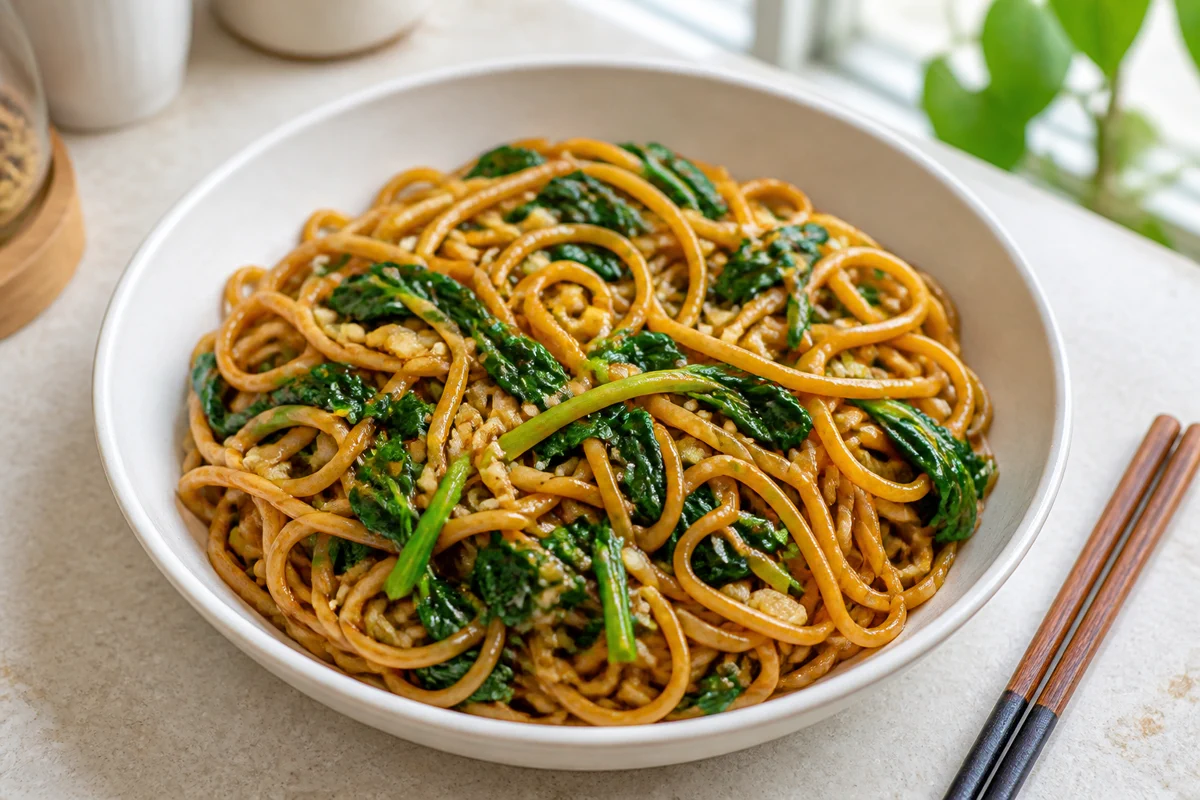
A fast Chinese-style noodle bowl with wilted spinach, garlic, soy sauce, sesame oil, and flexible supermarket noodles.
Spinach garlic noodles are designed for nights when you want Chinese-style flavor, a bowl of noodles, and a green vegetable without cooking a separate side dish. The spinach wilts directly into the pan, and the garlic soy sauce clings to the noodles with a splash of noodle water.
This recipe is intentionally flexible for international English-speaking home cooks. Chinese wheat noodles are ideal, but spaghetti, linguine, ramen noodles, or other pantry noodles can work when the sauce is balanced and the spinach is not overcooked.
Spinach wilts into the noodles in minutes, so the dish adds green vegetables without needing a separate stir-fry.
Before You Start
Large pot, Large skillet or wok, Tongs
- noodles
- spinach
- garlic
- soy sauce
- neutral oil
- Read all steps once before heating the pan, pot, or skillet. Chinese home cooking often moves quickly after the oil or broth is hot.
- Measure sauces, chop aromatics, and place ingredients near the stove before you start cooking.
- For noodles, have a colander ready before boiling water so you can drain them as soon as they are tender.
Success check: The noodles should be tender but not mushy, coated with sauce, and easy to lift with chopsticks or a fork.
Ingredients
- noodles: 250 g / 9 oz wheat noodles, spaghetti, or linguine.
- spinach: 150 g / 5 oz baby spinach.
- garlic: 4 cloves.
- green onion: 2 (optional).
- soy sauce: 2 tbsp.
- rice vinegar: 1 tsp (optional).
- toasted sesame oil: 1 tsp (optional).
- neutral oil: 1 tbsp.
- sesame seeds: 1 tsp (optional).
- chili crisp: Optional, to serve (optional).
Steps
- Prepare spinach and garlic
Rinse the spinach if needed and dry it well. Mince the garlic and slice green onion if using. Measure soy sauce, vinegar, sesame oil, and chili crisp before cooking because spinach wilts very quickly.
- Cook noodles and save water
Boil the noodles until just tender. Before draining, scoop out a small cup of the cooking water. Drain the noodles well. The starchy water helps the sauce cling if the noodles seem dry later.
- Bloom garlic gently
Heat neutral oil in a skillet over medium heat. Add garlic and stir for 30 to 60 seconds until fragrant. Keep the heat moderate; garlic should stay pale golden, not dark brown.
- Wilt spinach quickly
Add spinach by handfuls. Toss until it collapses but still looks green. This may take only 1 minute. If water collects in the pan, let most of it evaporate before adding noodles.
- Toss noodles with sauce
Add noodles, soy sauce, rice vinegar, sesame oil, and a splash of noodle water. Lift and turn the noodles with tongs until the spinach is spread through the strands and everything looks glossy.
- Finish with toppings
Turn off the heat and add green onion, sesame seeds, or chili crisp if using. Taste a noodle and adjust with a few drops of soy sauce or vinegar. Serve while warm.
Western Grocery Notes
- Baby spinach is fastest because it does not need chopping.
- Chinese wheat noodles, ramen noodles, spaghetti, or linguine all work for this beginner version.
- Use low-sodium soy sauce if you prefer a lighter noodle bowl.
Substitutions
- Use bok choy, cabbage, kale, or frozen spinach instead of fresh spinach.
- Use tamari instead of soy sauce if you need a gluten-free version and choose compatible noodles.
- Add tofu, egg, chicken, or mushrooms if you want more protein.
Ingredient Alternatives
-
Noodles
Provide the base and carry the garlic soy sauce.
Alternatives: Chinese wheat noodles, Ramen noodles, Spaghetti or linguine. Cook until just tender and reserve some cooking water so the sauce can loosen and coat evenly.
-
Spinach
Adds a fast green vegetable and keeps the bowl fresher.
Alternatives: Baby spinach, Chopped bok choy, Shredded cabbage. Frozen spinach works if thawed and squeezed dry before adding.
-
Garlic soy sauce
Creates the main savory flavor with a small pantry.
Alternatives: Soy sauce plus sesame oil, Tamari plus sesame oil, Soy sauce plus chili crisp. Use low-sodium soy sauce or add more noodle water if the bowl tastes too salty.
Cook Better Next Time
- Cook garlic gently; browned garlic can turn bitter in a simple noodle sauce.
- Add spinach before the noodles so it wilts without making the noodles soggy.
- Use noodle water one spoon at a time until the sauce looks glossy rather than dry.
FAQ
- Can I use spaghetti for spinach garlic noodles?
- Yes. Spaghetti and linguine work well when Chinese wheat noodles are unavailable.
- Can spinach garlic noodles be made ahead?
- They are best fresh, but leftovers can be reheated with a splash of water to loosen the sauce.
- How can I add protein?
- Add browned tofu, a fried egg, shredded chicken, shrimp, or mushrooms depending on what you have.
Related Recipes
-
Garlic Soy Noodles
Fast pantry noodles tossed with garlic, soy sauce, green onion, sesame oil, and spaghetti-friendly noodle options.
-
Sesame Peanut Noodles
Cold or room-temperature noodles with a peanut-soy dressing, cucumber, carrot, and sesame oil.
-
Cabbage Glass Noodle Stir-Fry
A light skillet stir-fry with cabbage, glass noodles, carrot, garlic, green onion, soy sauce, and sesame oil.
Recipe Collections
-
Easy Weeknight Chinese Recipes
Fast Chinese home-cooking ideas for busy nights, built around supermarket ingredients and simple pantry sauces.
-
Beginner Chinese Recipes
Starter Chinese recipes for new home cooks, with clear substitutions and low-risk cooking methods.
-
Vegetarian Chinese Recipes
Choose Chinese vegetarian dinners, noodles, tofu and egg dishes, with clear notes for replacing chicken stock, oyster sauce and optional meat.
-
Chinese Noodle Recipes
Chinese-style noodle bowls for Western kitchens, including scallion oil, sesame peanut, and cabbage mushroom noodles.
-
Budget Chinese Recipes
Affordable Chinese home-cooking ideas built from rice, noodles, eggs, cabbage, mushrooms, and basic sauces.
-
Pantry-Friendly Chinese Recipes
Chinese recipes that lean on shelf-stable sauces, rice, noodles, eggs, frozen vegetables, and flexible substitutions.