Image could not be loaded. You can still follow the written recipe below.
Sesame Peanut Noodles
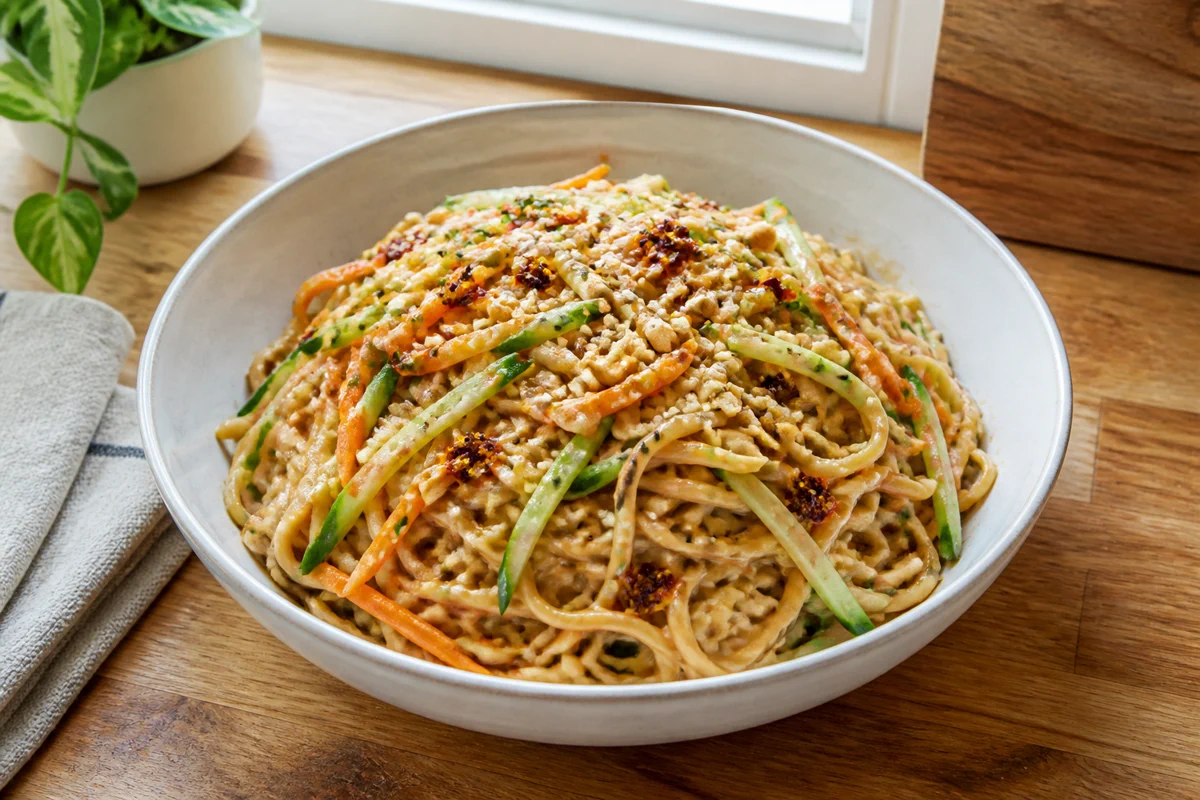
Cold or room-temperature noodles with a peanut-soy dressing, cucumber, carrot, and sesame oil.
Sesame peanut noodles are built for quick lunches and make-ahead meals. Peanut butter stands in for Chinese sesame paste because it is easy to buy in Western supermarkets, while soy sauce, vinegar, garlic, and sesame oil create a balanced dressing.
The recipe can be served cold or room temperature, making it useful for packed lunches. Cucumber and carrot add freshness, and chili crisp is optional for heat.
Peanut butter gives the body of sesame paste while staying easy to find in Western kitchens.
Before You Start
Pot, Mixing bowl, Whisk
- noodles
- peanut butter
- soy sauce
- rice vinegar
- toasted sesame oil
- cucumber
- Read all steps once before heating the pan, pot, or skillet. Chinese home cooking often moves quickly after the oil or broth is hot.
- Measure sauces, chop aromatics, and place ingredients near the stove before you start cooking.
- For noodles, have a colander ready before boiling water so you can drain them as soon as they are tender.
- Add spicy ingredients gradually if you are heat-sensitive; you can add more at the table.
Success check: The noodles should be tender but not mushy, coated with sauce, and easy to lift with chopsticks or a fork.
Ingredients
- noodles: 200 g.
- peanut butter: 3 tbsp.
- soy sauce: 2 tbsp.
- rice vinegar: 1 tbsp.
- toasted sesame oil: 1 tsp.
- cucumber: 1/2.
- carrot: 1 (optional).
- garlic: 1 small clove.
- chili crisp: 1 tsp (optional).
- peanuts: A handful (optional).
Steps
- Prepare the vegetables first
Slice the cucumber into thin strips and grate or thinly cut the carrot if using. Set the vegetables, chili crisp, and peanuts beside your mixing bowl. Cold noodle dishes move quickly once the noodles are cooked, so having toppings ready prevents overcooked noodles.
- Cook the noodles until just tender
Bring a pot of water to a boil and add the noodles. Stir during the first minute so they do not stick together. Cook according to the package, then taste one strand; it should be tender but not mushy.
- Rinse and drain well
Drain the noodles and rinse them briefly under cool running water to stop the cooking and remove surface starch. Shake the colander several times. Wet noodles make the peanut sauce thin, so let them drain while you mix the sauce.
- Whisk a smooth peanut sauce
In a large bowl, whisk peanut butter, soy sauce, rice vinegar, sesame oil, garlic, and a spoonful of warm water. Keep whisking until the sauce changes from lumpy to smooth. Add more warm water one teaspoon at a time if it is too thick to coat noodles.
- Toss noodles with sauce
Add the drained noodles to the bowl and toss slowly with tongs. Lift and turn the noodles until they are evenly coated. If the noodles clump, add one small splash of water and keep tossing rather than adding a lot of liquid at once.
- Add crunch and serve
Fold in cucumber, carrot, chili crisp if using, and peanuts. Taste a noodle with the vegetables and adjust with a few drops of vinegar for brightness or soy sauce for salt. Serve cool or at room temperature.
Western Grocery Notes
- Unsweetened peanut butter is best, but regular peanut butter works if you reduce added sugar.
- Spaghetti or linguine can replace Chinese wheat noodles.
Substitutions
- Use tahini if peanut butter is not suitable.
- Use lime juice or white wine vinegar if rice vinegar is unavailable.
Ingredient Alternatives
-
Peanut butter
Creates the creamy sauce body.
Alternatives: Tahini, Chinese sesame paste, Sunflower seed butter. Tahini is less sweet and more bitter, so add a small pinch of sugar if needed.
-
Noodles
Carry a thick cold dressing.
Alternatives: Spaghetti, Linguine, Ramen noodles. Rinse cooked noodles briefly so they do not overcook or clump.
-
Rice vinegar
Cuts richness from the peanut sauce.
Alternatives: Lime juice, White wine vinegar, Apple cider vinegar. Lime changes the flavor but works well for a brighter lunch bowl.
Cook Better Next Time
- Loosen peanut butter with warm water before adding noodles.
- Drain noodles very well so the sauce stays creamy instead of thin.
- Hold back some dressing and refresh leftovers before serving.
FAQ
- Can sesame peanut noodles be made ahead?
- Yes. Store noodles and a little extra dressing separately, then toss again before serving.
- What can replace peanut butter?
- Tahini, Chinese sesame paste, or sunflower seed butter can work depending on allergy and flavor needs.
- Are sesame peanut noodles served hot or cold?
- They are usually best cold or room temperature, but warm noodles also work if served right away.
Related Recipes
-
Scallion Oil Noodles
A pantry-friendly noodle bowl built from green onions, soy sauce, oil, and spaghetti or wheat noodles.
-
Cabbage Mushroom Noodles
A budget noodle stir-fry with cabbage, mushrooms, garlic, ginger, soy sauce, and vinegar.
-
Chinese Cucumber Salad
A crisp, garlicky side dish with cucumber, rice vinegar, soy sauce, sesame oil, and optional chili crisp.
Recipe Collections
-
Easy Weeknight Chinese Recipes
Fast Chinese home-cooking ideas for busy nights, built around supermarket ingredients and simple pantry sauces.
-
Vegetarian Chinese Recipes
Choose Chinese vegetarian dinners, noodles, tofu and egg dishes, with clear notes for replacing chicken stock, oyster sauce and optional meat.
-
Chinese Noodle Recipes
Chinese-style noodle bowls for Western kitchens, including scallion oil, sesame peanut, and cabbage mushroom noodles.
-
Chinese Sauce Recipes
Beginner Chinese sauce recipes and sauce-forward meals, including stir-fry sauce, brown sauce vegetables, chili crisp noodles, ginger scallion sauce, and dumpling dipping sauce.
-
Pantry-Friendly Chinese Recipes
Chinese recipes that lean on shelf-stable sauces, rice, noodles, eggs, frozen vegetables, and flexible substitutions.