Image could not be loaded. You can still follow the written recipe below.
Chicken Chow Mein
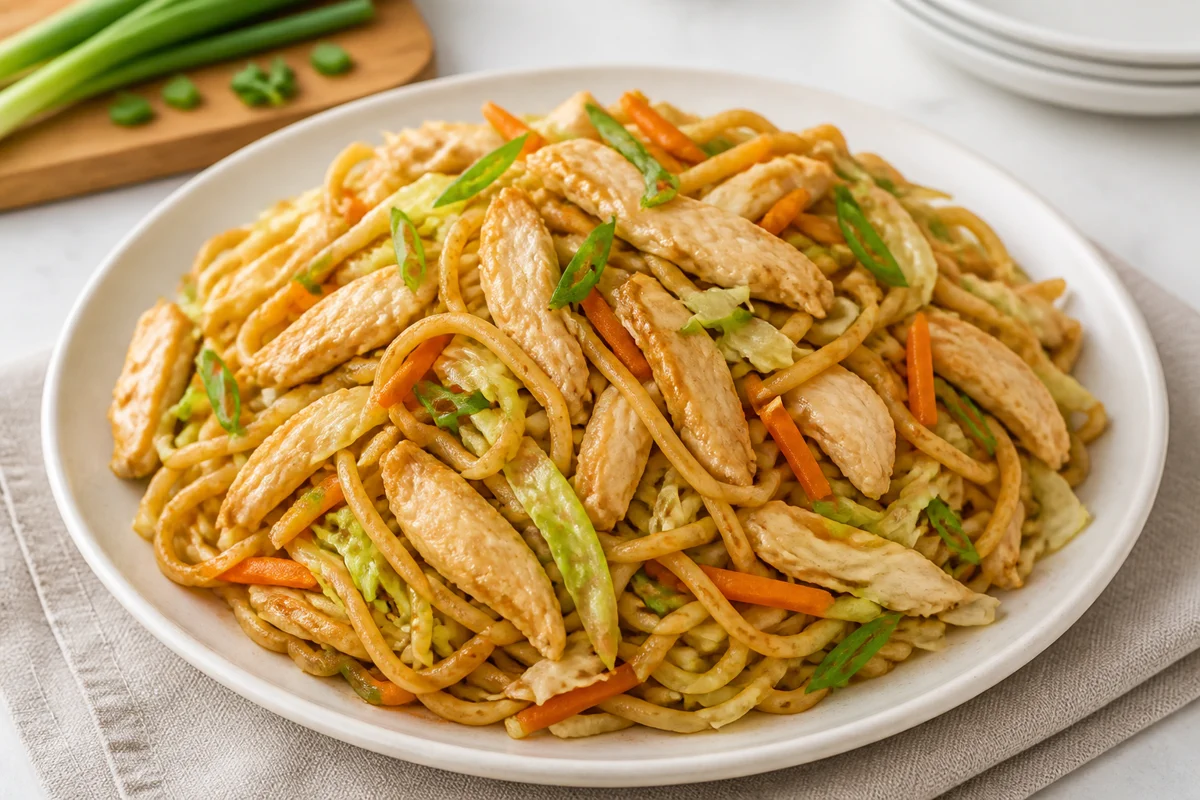
A weeknight chicken chow mein with thin chicken, cabbage, carrots, green onion, noodles, and a savory soy-oyster sauce.
Chicken chow mein is a takeout-style noodle dish that works well at home when the ingredient list is kept realistic. Cabbage, carrots, green onions, chicken, and dried noodles give structure without requiring bean sprouts or a restaurant wok burner.
This version focuses on sequence: marinate thin chicken, cook noodles just until tender, stir-fry vegetables quickly, and toss everything with a concentrated sauce. The result should be savory and lightly glossy, not soupy.
It delivers the familiar takeout noodle shape while staying realistic for home stoves, supermarket cabbage, and pantry sauces.
Before You Start
Large skillet or wok, Pot for noodles, Tongs
- chicken
- noodles
- cabbage
- carrot
- green onion
- soy sauce
- Read all steps once before heating the pan, pot, or skillet. Chinese home cooking often moves quickly after the oil or broth is hot.
- Measure sauces, chop aromatics, and place ingredients near the stove before you start cooking.
- For stir-fries and skillet dishes, keep ingredients separated by cooking order so nothing overcooks while you look for the next item.
- For noodles, have a colander ready before boiling water so you can drain them as soon as they are tender.
Success check: The noodles should be tender but not mushy, coated with sauce, and easy to lift with chopsticks or a fork.
Ingredients
- chicken: 350 g / 12 oz.
- noodles: 250 g / 9 oz.
- cabbage: 3 cups sliced.
- carrot: 1 medium.
- green onion: 3.
- soy sauce: 3 tbsp.
- oyster sauce: 1 tbsp.
- garlic: 2 cloves.
- ginger: 1 tsp grated (optional).
- cornstarch: 1 tsp.
- neutral oil: 1 tbsp.
Steps
- Slice and marinate chicken
Slice the chicken thinly so it cooks quickly in the skillet. Toss it with a little soy sauce, cornstarch, and oil until lightly coated. Let it sit while you cut the cabbage, carrot, green onions, garlic, and ginger.
- Cook noodles and drain well
Boil the noodles until just tender, then drain them thoroughly. Rinse only if they feel very sticky. Wet noodles dilute the sauce, so shake the colander and let them sit for a minute while the pan heats.
- Cook the chicken first
Heat a large skillet over medium-high heat with oil. Add the chicken in one layer and cook until it loses its raw pink color and begins to brown. Move it to a plate if your pan is small.
- Stir-fry vegetables and aromatics
Add cabbage, carrot, green onion whites, garlic, and ginger to the pan. Stir often for 2 to 3 minutes. The cabbage should soften but not collapse. If anything sticks, add a spoonful of water and scrape gently.
- Add noodles and sauce
Return the chicken if you removed it, then add noodles, oyster sauce, remaining soy sauce, and a small splash of water. Lift and turn the noodles with tongs so the sauce spreads instead of pooling at the bottom.
- Serve with noodles still springy
Stop cooking when the noodles are hot, evenly coated, and still springy. Add green onion tops if using. Serve immediately, because chow mein becomes softer the longer it sits in the hot pan.
Western Grocery Notes
- Use dried chow mein noodles, ramen noodles, spaghetti, or linguine depending on availability.
- Green cabbage is usually cheaper and easier to find than napa cabbage.
- Pre-sliced stir-fry chicken can save prep time if it is cut thinly.
Substitutions
- Use turkey, tofu, or shrimp instead of chicken.
- Use coleslaw mix instead of slicing cabbage and carrot.
- Use hoisin plus soy sauce if oyster sauce is unavailable.
Ingredient Alternatives
-
Chicken
Provides lean protein and makes the noodles a full meal.
Alternatives: Chicken thigh, Chicken breast, Turkey breast. Thin slices cook fast and stay tender with a short cornstarch marinade.
-
Noodles
Create the chow mein base.
Alternatives: Dried chow mein noodles, Ramen noodles, Spaghetti. Avoid overcooking noodles before they reach the skillet; they continue softening when tossed.
-
Cabbage
Adds bulk, sweetness, and crunch.
Alternatives: Green cabbage, Napa cabbage, Bagged coleslaw mix. Cabbage is more reliable than bean sprouts in many Western supermarkets.
Cook Better Next Time
- Drain noodles very well so the final dish is glossy rather than watery.
- Cook chicken before vegetables if your skillet is not large enough for everything at once.
- Add green onion tops at the end for fresh flavor.
FAQ
- Can I make chicken chow mein with spaghetti?
- Yes. Spaghetti is not traditional, but it works when cooked al dente and tossed with a concentrated sauce.
- What is the difference between chow mein and lo mein?
- In this home-cooking context, chow mein is a drier stir-fried noodle dish, while lo mein is usually softer and more sauce-tossed.
- Can I use coleslaw mix for chow mein?
- Yes. Bagged cabbage and carrot mix is a useful shortcut for weeknight chow mein.
Related Recipes
-
Vegetable Lo Mein
A flexible vegetable lo mein with noodles, cabbage, carrots, mushrooms, bell pepper, garlic, ginger, and a simple soy sauce glaze.
-
Sesame Peanut Noodles
Cold or room-temperature noodles with a peanut-soy dressing, cucumber, carrot, and sesame oil.
-
Chicken and Broccoli Stir-Fry
A practical takeout-style stir-fry using chicken, broccoli, soy sauce, garlic, ginger, and cornstarch.
Recipe Collections
-
Chinese Noodle Recipes
Chinese-style noodle bowls for Western kitchens, including scallion oil, sesame peanut, and cabbage mushroom noodles.
-
Chinese Chicken Recipes
Chinese-style chicken recipes for Western kitchens, including stir-fries, fried rice, takeout-style sauces, and rice bowls.
-
Chinese Takeout at Home
Chinese takeout-style recipes adapted for home cooks using supermarket chicken, beef, noodles, vegetables, and practical pantry sauces.
-
Family-Friendly Chinese Dinners
Mild Chinese-style dinners for families, children, and mixed spice preferences using familiar proteins, noodles, rice, and vegetables.