Chinese Brown Sauce Vegetables
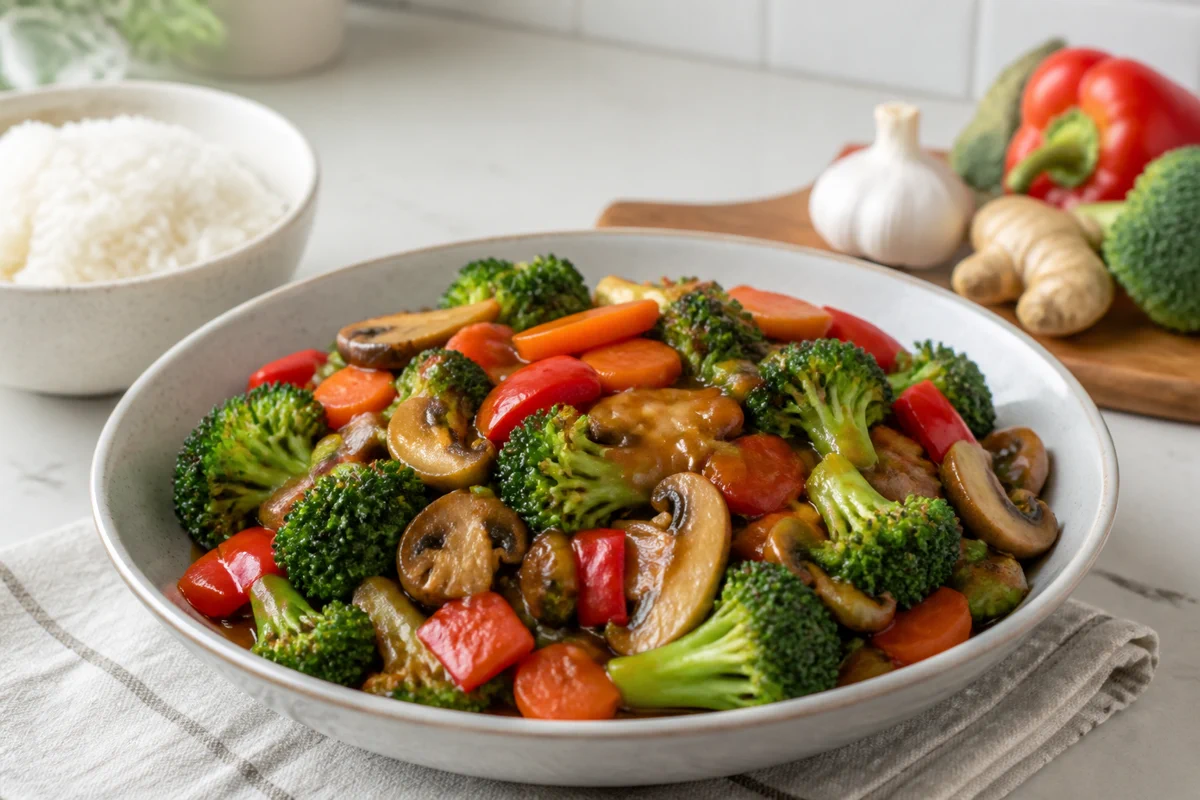
A glossy brown sauce vegetable stir-fry with broccoli, mushrooms, carrots, bell pepper, garlic, ginger, soy sauce, and oyster sauce alternatives.
Chinese brown sauce vegetables are a practical way to turn supermarket produce into a glossy side dish or rice bowl. The method is more important than the exact vegetables: cook firm vegetables first, add tender vegetables second, then thicken the sauce at the end.
The sauce uses pantry staples instead of a bottled stir-fry sauce. It is mild by default, vegetarian-adaptable, and designed to work with broccoli, mushrooms, carrots, peppers, snow peas, bok choy, cabbage, or frozen vegetables.
It turns a flexible mix of supermarket vegetables into a saucy rice-bowl side while teaching the order of crisp vegetables, tender vegetables, and thickened sauce.
Before You Start
Large skillet or wok, Small bowl, Spatula
- broccoli
- mushroom
- carrot
- garlic
- ginger
- soy sauce
- Read all steps once before heating the pan, pot, or skillet. Chinese home cooking often moves quickly after the oil or broth is hot.
- Measure sauces, chop aromatics, and place ingredients near the stove before you start cooking.
- For stir-fries and skillet dishes, keep ingredients separated by cooking order so nothing overcooks while you look for the next item.
- If serving with rice, start the rice first so the hot topping is ready at the same time.
Success check: The food should look glossy and hot, with vegetables still holding some texture instead of turning watery.
Ingredients
- broccoli: 3 cups florets.
- mushroom: 1 cup sliced.
- carrot: 1 small, thinly sliced.
- bell pepper: 1, sliced (optional).
- garlic: 2 cloves minced.
- ginger: 1 tbsp minced.
- soy sauce: 2 tbsp.
- oyster sauce: 1 tbsp oyster sauce or vegetarian mushroom oyster sauce.
- cornstarch: 2 tsp.
- neutral oil: 1 1/2 tbsp.
- toasted sesame oil: 1 tsp, optional (optional).
- rice: Cooked rice, to serve (optional).
Steps
- Cut vegetables by cooking time
Cut broccoli into small florets, slice carrots thinly, slice mushrooms, and keep bell pepper strips separate if using. Smaller broccoli and thin carrot pieces cook before the sauce thickens, which helps beginners avoid raw centers.
- Mix the brown sauce first
In a small bowl, stir soy sauce, oyster sauce, cornstarch, and 1/3 cup water until smooth. The sauce must be ready before the skillet gets hot because garlic and ginger can burn while you are measuring at the stove.
- Steam-sear the firm vegetables
Heat oil in a large skillet over medium-high heat. Add broccoli and carrot with a small splash of water, then cover for 2 minutes. Uncover and let the water cook off so the vegetables stay bright but start to brown lightly.
- Add mushrooms and aromatics
Add mushrooms and bell pepper if using. Cook until the mushrooms shrink and the pepper loses its raw edge. Stir in garlic and ginger for about 30 seconds, lowering the heat if the garlic darkens too quickly.
- Thicken the sauce in the pan
Whisk the sauce again because cornstarch settles, then pour it around the edge of the skillet. Stir and toss until the sauce bubbles, turns glossy, and coats the vegetables. If it becomes too thick, add water one spoon at a time.
- Finish and serve while glossy
Turn off the heat and add sesame oil if using. Serve the vegetables immediately over rice or beside a protein dish. Brown sauce tastes best while shiny and loose, before the cornstarch tightens as it cools.
Western Grocery Notes
- Pre-cut broccoli florets are fine for this recipe, but cut very large florets smaller so they cook evenly.
- Button, cremini, chestnut, or mixed mushrooms all work because the brown sauce supplies most of the seasoning.
Substitutions
- Use snow peas, bok choy stems, green beans, cabbage, or frozen broccoli instead of one of the vegetables.
- Use vegetarian mushroom oyster sauce or hoisin plus soy sauce when cooking for a meat-free table.
Ingredient Alternatives
-
Mixed vegetables
Provide the main texture and color of the stir-fry.
Alternatives: Broccoli and mushrooms, Snow peas and carrots, Bok choy and cabbage. Cut firm vegetables smaller and add leafy greens near the end so everything finishes at the same time.
-
Oyster sauce
Gives the brown sauce savory depth.
Alternatives: Vegetarian mushroom oyster sauce, Hoisin plus soy sauce, Soy sauce plus a pinch of sugar. Use vegetarian mushroom oyster sauce when you want the closest meat-free flavor.
-
Cornstarch slurry
Turns the thin sauce into a glossy coating.
Alternatives: Potato starch slurry, Arrowroot slurry, A reduced thinner sauce. If the sauce gets too thick, loosen it with water one spoon at a time while tossing.
Cook Better Next Time
- Keep the vegetables moving after the sauce goes in so the starch does not set in one spot.
- Do not overcook the broccoli before adding sauce; it should still look bright green.
- Serve with rice if using the full sauce amount because the sauce is intentionally concentrated.
FAQ
- What is Chinese brown sauce made of?
- This home version uses soy sauce, oyster sauce or a vegetarian alternative, garlic, ginger, cornstarch, and water.
- Can I use frozen vegetables?
- Yes. Thaw and pat them dry if possible, then use less added water so the sauce does not become thin.
- Is Chinese brown sauce vegetarian?
- It can be vegetarian if you use vegetarian mushroom oyster sauce or replace oyster sauce with hoisin plus soy sauce.
Related Recipes
-
All-Purpose Chinese Stir-Fry Sauce
A beginner-friendly soy, oyster sauce, vinegar, garlic, ginger, and cornstarch sauce for quick vegetable, chicken, tofu, or noodle stir-fries.
-
Broccoli Mushroom Stir-Fry
A vegetable-forward stir-fry with broccoli, mushrooms, garlic, ginger, soy sauce, and a simple savory glaze.
-
Garlic Bok Choy Tofu Stir-Fry
A vegetarian-friendly tofu and bok choy stir-fry with garlic, ginger, soy sauce, and a light glossy sauce for rice.
Recipe Collections
-
Easy Weeknight Chinese Recipes
Fast Chinese home-cooking ideas for busy nights, built around supermarket ingredients and simple pantry sauces.
-
Beginner Chinese Recipes
Starter Chinese recipes for new home cooks, with clear substitutions and low-risk cooking methods.
-
Vegetarian Chinese Recipes
Choose Chinese vegetarian dinners, noodles, tofu and egg dishes, with clear notes for replacing chicken stock, oyster sauce and optional meat.
-
Budget Chinese Recipes
Affordable Chinese home-cooking ideas built from rice, noodles, eggs, cabbage, mushrooms, and basic sauces.
-
Chinese Sauce Recipes
Beginner Chinese sauce recipes and sauce-forward meals, including stir-fry sauce, brown sauce vegetables, chili crisp noodles, ginger scallion sauce, and dumpling dipping sauce.
-
Pantry-Friendly Chinese Recipes
Chinese recipes that lean on shelf-stable sauces, rice, noodles, eggs, frozen vegetables, and flexible substitutions.