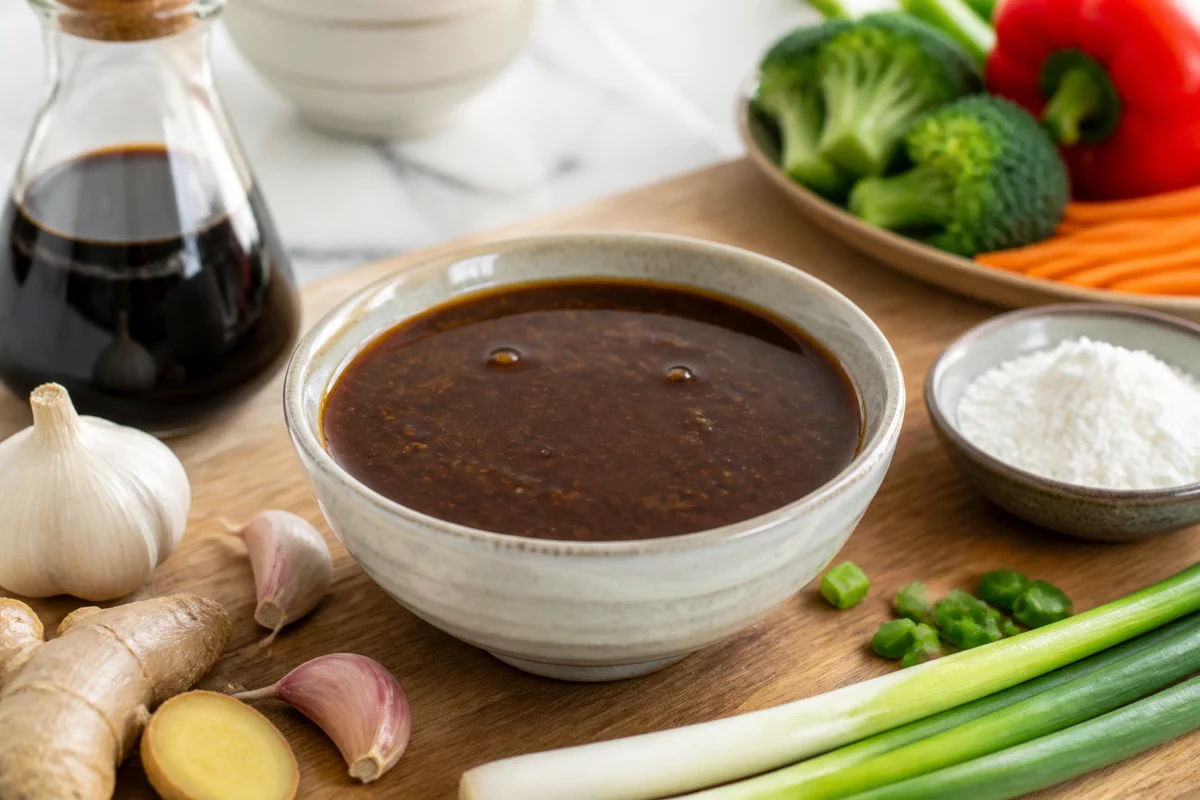
All-Purpose Chinese Stir-Fry Sauce
A beginner-friendly soy, oyster sauce, vinegar, garlic, ginger, and cornstarch sauce for quick vegetable, chicken, tofu, or noodle stir-fries.
All-purpose Chinese stir-fry sauce is useful for cooks who want to stop guessing at the stove. Instead of opening several bottles while vegetables are already cooking, mix a small bowl of sauce first and add it at the end.
This version is written for Western home kitchens and flexible shopping. Use it with broccoli, mushrooms, chicken, tofu, noodles, or leftover vegetables, and check the alternatives if you need a vegetarian or lower-sodium version.
It gives new cooks a repeatable stir-fry sauce ratio before they start improvising with thicker, sweeter, spicier, or vegetarian versions.
Before You Start
Small mixing bowl, Measuring spoons, Whisk or fork
- soy sauce
- oyster sauce
- rice vinegar
- water or low-sodium stock
- cornstarch
- sugar
- Read all steps once before heating the pan, pot, or skillet. Chinese home cooking often moves quickly after the oil or broth is hot.
- Measure sauces, chop aromatics, and place ingredients near the stove before you start cooking.
- For stir-fries and skillet dishes, keep ingredients separated by cooking order so nothing overcooks while you look for the next item.
Success check: The food should look glossy and hot, with vegetables still holding some texture instead of turning watery.
Ingredients
- soy sauce: 3 tbsp.
- oyster sauce: 1 tbsp.
- rice vinegar: 1 tbsp.
- water or low-sodium stock: 1/4 cup water or low-sodium stock.
- cornstarch: 2 tsp.
- sugar: 1 tsp.
- garlic: 1 small clove grated.
- ginger: 1 tsp grated.
- toasted sesame oil: 1 tsp, optional (optional).
Steps
- Start with the salty base
Add soy sauce, oyster sauce, rice vinegar, and water or low-sodium stock to a small bowl. Stir these liquid ingredients first so the salt, savory depth, and acidity are balanced before the cornstarch goes in.
- Balance the sauce gently
Add sugar, grated garlic, and grated ginger. The sugar should soften the salty and sour edges, not make the sauce taste sweet. Taste a tiny drop from a spoon and adjust only after the aromatics are mixed in.
- Whisk in the cornstarch
Sprinkle cornstarch over the liquid while whisking with a fork or small whisk. Scrape the sides of the bowl until no dry starch clumps remain. A smooth slurry is what gives a stir-fry its glossy finish.
- Use the sauce at the end
Cook meat, tofu, or vegetables first, then pour this sauce into the hot pan during the last minute. Stir constantly as it bubbles. The sauce should turn shiny and cling to the food instead of pooling in the skillet.
- Store only before cooking
If making the sauce ahead, pour it into a jar, cover, and refrigerate for up to 3 days. Shake very well before using because cornstarch settles at the bottom and can leave the sauce thin if it is not mixed again.
Western Grocery Notes
- Low-sodium soy sauce is easier to adjust, especially when the sauce will coat noodles or rice.
- Vegetarian mushroom oyster sauce works well if you want one bottle that covers both meat and vegetarian stir-fries.
Substitutions
- Use hoisin plus a little extra soy sauce if oyster sauce is unavailable, but expect a sweeter result.
- Use black vinegar for a deeper Chinese pantry flavor, or apple cider vinegar for a practical supermarket backup.
Ingredient Alternatives
-
Soy sauce
Provides the salty backbone of the sauce.
Alternatives: Low-sodium soy sauce, Tamari, Light soy sauce. Low-sodium soy sauce is the easiest choice if the sauce will be used with salty noodles or store-bought stock.
-
Oyster sauce
Adds savory body and a little sweetness.
Alternatives: Vegetarian mushroom oyster sauce, Hoisin plus soy sauce, Extra soy sauce with sugar. Vegetarian mushroom oyster sauce is the closest meat-free option; hoisin makes the sauce sweeter.
-
Cornstarch
Thickens the sauce so it turns glossy in a hot pan.
Alternatives: Potato starch, Arrowroot starch, Skip for a thinner sauce. Always whisk starch into cool liquid before it goes into the skillet or it can clump.
Cook Better Next Time
- Whisk again right before pouring because cornstarch sinks quickly.
- Add sauce after the main ingredients are cooked; the sauce needs only a short bubble to thicken.
- Use a splash of water if the pan gets dry before the sauce turns glossy.
FAQ
- Can I make this stir-fry sauce vegetarian?
- Yes. Use vegetarian mushroom oyster sauce or use hoisin plus soy sauce for a sweeter pantry version.
- How much stir-fry sauce should I use?
- This recipe makes enough for about 4 servings of vegetables, chicken, tofu, or noodles. Use less if the pan is small.
- Can I make stir-fry sauce ahead?
- Yes. Refrigerate it in a jar for up to 3 days and shake well before using because the cornstarch settles.
Related Recipes
-
Chinese Brown Sauce Vegetables
A glossy brown sauce vegetable stir-fry with broccoli, mushrooms, carrots, bell pepper, garlic, ginger, soy sauce, and oyster sauce alternatives.
-
Chicken and Broccoli Stir-Fry
A practical takeout-style stir-fry using chicken, broccoli, soy sauce, garlic, ginger, and cornstarch.
-
Vegetable Lo Mein
A flexible vegetable lo mein with noodles, cabbage, carrots, mushrooms, bell pepper, garlic, ginger, and a simple soy sauce glaze.
Recipe Collections
-
Beginner Chinese Recipes
Starter Chinese recipes for new home cooks, with clear substitutions and low-risk cooking methods.
-
Budget Chinese Recipes
Affordable Chinese home-cooking ideas built from rice, noodles, eggs, cabbage, mushrooms, and basic sauces.
-
Chinese Sauce Recipes
Beginner Chinese sauce recipes and sauce-forward meals, including stir-fry sauce, brown sauce vegetables, chili crisp noodles, ginger scallion sauce, and dumpling dipping sauce.
-
Pantry-Friendly Chinese Recipes
Chinese recipes that lean on shelf-stable sauces, rice, noodles, eggs, frozen vegetables, and flexible substitutions.
-
Chinese Side Dishes
Simple Chinese side dishes and toppings that make rice bowls, noodles, and stir-fries feel like a full meal.
-
Chinese Takeout at Home
Chinese takeout-style recipes adapted for home cooks using supermarket chicken, beef, noodles, vegetables, and practical pantry sauces.