Image could not be loaded. You can still follow the written recipe below.
Weeknight Mapo Tofu
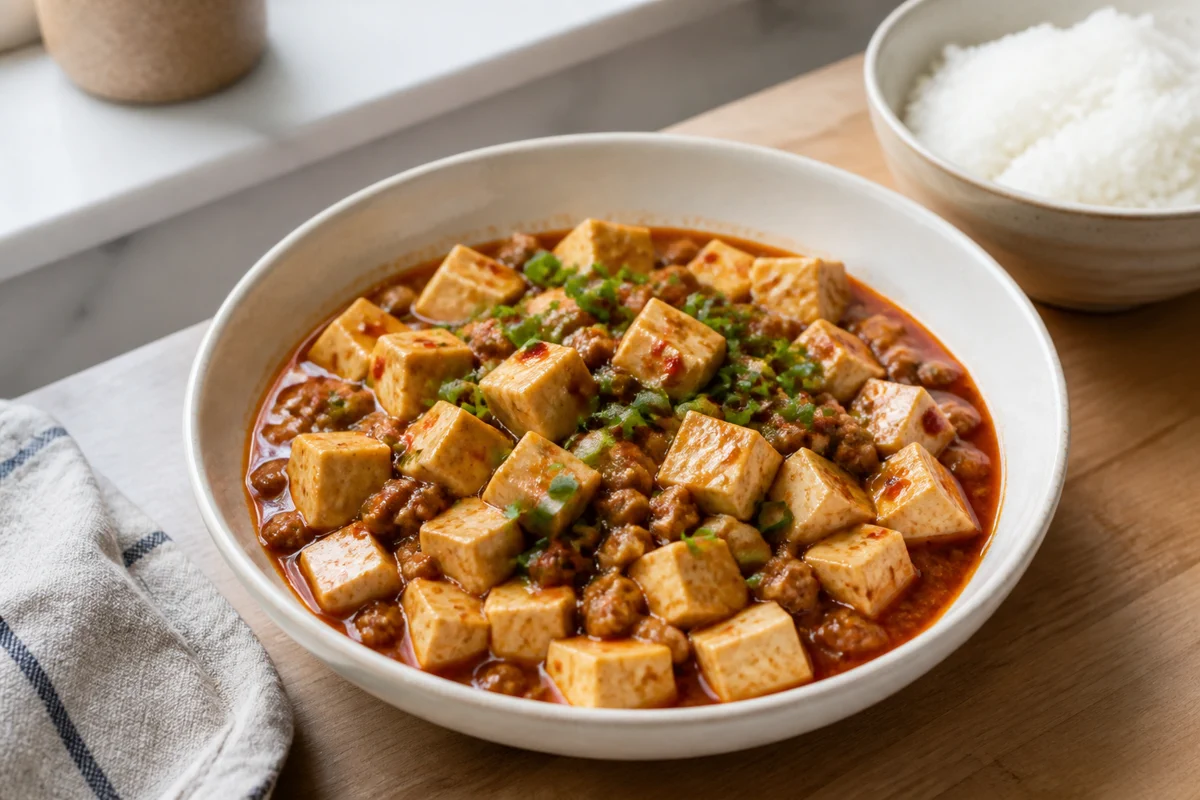
A simplified mapo tofu with supermarket tofu, ground pork, garlic, ginger, chili bean paste, and rice.
Weeknight mapo tofu keeps the saucy tofu format and gentle heat of the classic dish while giving realistic paths for cooks who cannot easily buy every Sichuan pantry ingredient. Firm tofu is easier for beginners, and the sauce can be made with doubanjiang or an accessible chili crisp fallback.
This page is written for home cooks who want a rice bowl dinner rather than restaurant-level authenticity. Sichuan peppercorn is recommended for aroma, but the dish is still useful without it.
It keeps the signature saucy tofu format while offering realistic substitutions for harder-to-find pantry items.
Before You Start
Skillet or wok, Small bowl, Spatula
- tofu
- doubanjiang
- soy sauce
- garlic
- ginger
- green onion
- Read all steps once before heating the pan, pot, or skillet. Chinese home cooking often moves quickly after the oil or broth is hot.
- Measure sauces, chop aromatics, and place ingredients near the stove before you start cooking.
- If serving with rice, start the rice first so the hot topping is ready at the same time.
- Add spicy ingredients gradually if you are heat-sensitive; you can add more at the table.
Success check: Taste before serving: the dish should be hot, seasoned enough to eat with rice or noodles, and adjusted gently if needed.
Ingredients
- tofu: 450 g / 1 lb.
- ground pork: 150 g / 5 oz (optional).
- doubanjiang: 1 to 2 tbsp. Substitution: Use chili crisp plus soy sauce for an accessible but less traditional version.
- soy sauce: 1 tbsp.
- garlic: 3 cloves.
- ginger: 1 tbsp grated.
- green onion: 2.
- cornstarch: 1 tbsp.
- Sichuan peppercorn: 1 tsp ground (optional).
- rice: Cooked rice, to serve (optional).
Steps
- Prepare tofu carefully
Drain the tofu and cut it into cubes about 3/4 inch wide. If you worry it will break, simmer the cubes in lightly salted water for 2 minutes, then drain them gently. Keep the tofu near the stove so you do not have to stir hard later.
- Mix the thickener before cooking
Stir the cornstarch with 2 tablespoons cold water in a small cup until smooth. This is the slurry that thickens the sauce at the end. Do this before the pan is hot, because cornstarch clumps if you add it dry to hot liquid.
- Brown the pork or skip it cleanly
Heat a skillet over medium-high heat. If using pork, cook it with a little oil until it loses its pink color and small browned bits appear. If skipping pork, start with oil, then go straight to the doubanjiang, garlic, and ginger.
- Cook the spicy bean paste
Add doubanjiang, garlic, and ginger to the pan. Stir for 30 to 60 seconds until the paste darkens slightly and smells savory. Keep the heat at medium if it starts to stick. This step wakes up the sauce, so do not rush it.
- Simmer tofu in the sauce
Add soy sauce and about 1 cup water, then slide in the tofu. Use a spatula to gently nudge the cubes into the sauce instead of stirring hard. Simmer for 3 to 5 minutes so the tofu warms through and absorbs flavor.
- Thicken and finish gently
Stir the cornstarch slurry again, then drizzle it into the bubbling sauce while gently shaking or nudging the pan. Stop when the sauce becomes glossy and lightly coats the tofu. Turn off the heat and finish with green onion and Sichuan peppercorn if using.
Western Grocery Notes
- Firm tofu is usually easier for beginners than silken tofu.
- Doubanjiang is easiest to find in Asian grocery stores or online.
Substitutions
- Use chili crisp plus soy sauce if doubanjiang is unavailable.
- Skip pork or replace it with chopped mushrooms for a vegetarian version.
- Sichuan peppercorn is optional but gives the classic numbing aroma.
Ingredient Alternatives
-
Tofu
Provides the soft main texture.
Alternatives: Firm tofu, Medium tofu, Extra-firm tofu. Silken tofu is traditional in some versions but harder to handle; firm tofu is safer for beginners.
-
Doubanjiang
Adds fermented chili bean depth.
Alternatives: Chili crisp plus soy sauce, Miso plus chili oil, Sriracha plus soy sauce. Fallbacks are less traditional but keep the dish spicy, salty, and savory.
-
Ground pork
Adds savory richness.
Alternatives: Chopped mushrooms, Plant-based mince, Skip and add extra tofu. Mushrooms are the best vegetarian substitute because they brown and add umami.
Cook Better Next Time
- Simmer tofu gently; rough stirring breaks the cubes.
- Bloom the chili paste with garlic and ginger before adding liquid.
- Add cornstarch slurry gradually so the sauce coats the tofu without turning gummy.
FAQ
- Can I make mapo tofu without doubanjiang?
- Yes, but it will be less traditional. Chili crisp plus soy sauce is the easiest substitute for an accessible weeknight version.
- Is mapo tofu always very spicy?
- No. Start with one tablespoon of chili bean paste and leave chili crisp on the side if you want moderate heat.
- Can mapo tofu be vegetarian?
- Yes. Replace pork with chopped mushrooms and use vegetarian sauces.
Related Recipes
-
Chinese Cucumber Salad
A crisp, garlicky side dish with cucumber, rice vinegar, soy sauce, sesame oil, and optional chili crisp.
-
Soy Sauce Eggs
Jammy eggs marinated with soy sauce, ginger, garlic, sugar, and vinegar for rice bowls or noodles.
-
Garlic Ginger Fried Rice
A flexible fried rice for leftover rice, eggs, frozen vegetables, garlic, ginger, and soy sauce.
Recipe Collections
-
Vegetarian Chinese Recipes
Choose Chinese vegetarian dinners, noodles, tofu and egg dishes, with clear notes for replacing chicken stock, oyster sauce and optional meat.
-
Chinese Tofu Recipes
Chinese-style tofu recipes for Western kitchens, including saucy rice bowls, crisp skillet tofu, vegetables, and practical meat-free substitutions.
-
High-Protein Chinese Dinners
Protein-focused Chinese dinner ideas using chicken, beef, tofu, eggs, pork, and practical meat-free alternatives.
-
Chinese Rice Bowl Recipes
Chinese-style rice bowl dinners with chicken, tofu, pork, shrimp, eggs, vegetables, and supermarket-friendly sauces.