Image could not be loaded. You can still follow the written recipe below.
Simple Chinese Steamed Eggs
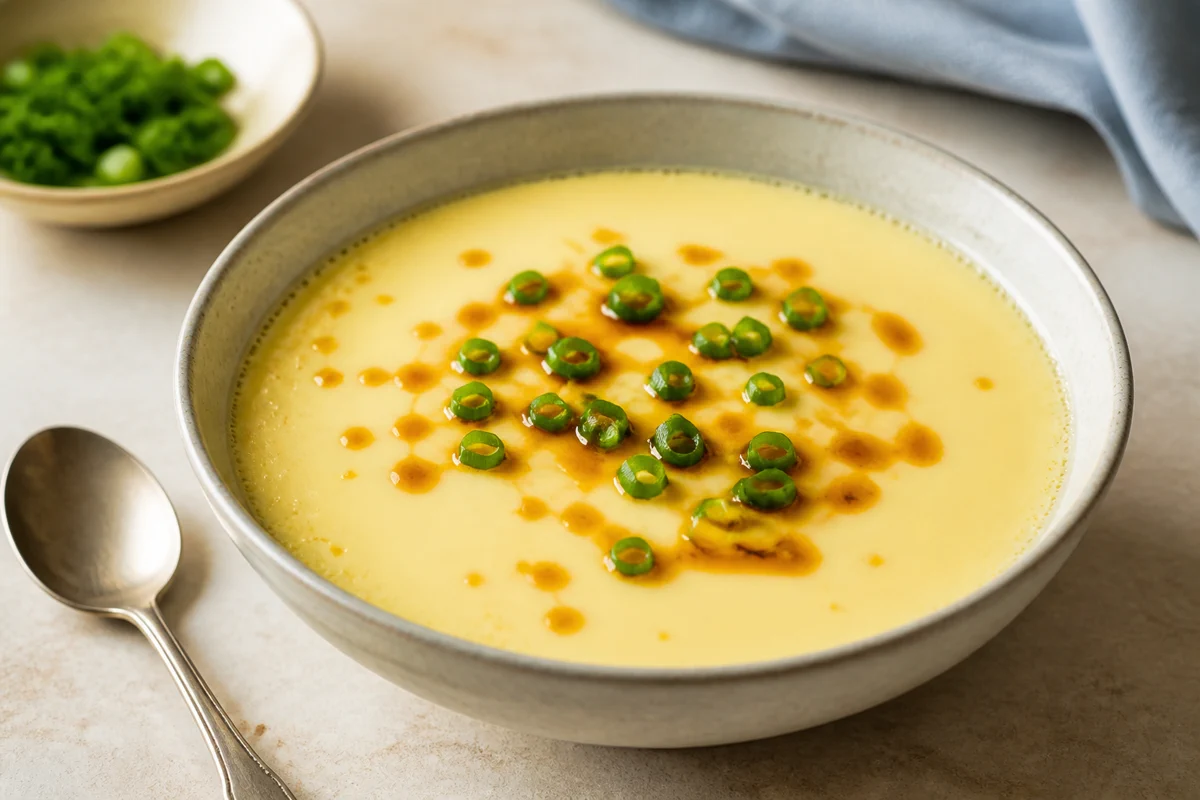
A soft savory egg custard made with eggs, warm water or stock, soy sauce, and green onion.
Chinese steamed eggs are a soft savory custard, not an omelet. The dish is gentle, budget-friendly, and useful for families because the ingredients are familiar: eggs, water or stock, soy sauce, and green onion.
The main challenge is heat control. Steam too hard and the custard can turn bubbly or firm. Steam gently, strain the mixture, and stop when the center is just set for the smoothest result.
It is gentle, inexpensive, and useful for families because the ingredient list is short and the texture is comforting.
Before You Start
Heatproof shallow bowl, Pot with lid, Steamer rack or folded towel
- egg
- soy sauce
- Read all steps once before heating the pan, pot, or skillet. Chinese home cooking often moves quickly after the oil or broth is hot.
- Measure sauces, chop aromatics, and place ingredients near the stove before you start cooking.
Success check: Taste before serving: the dish should be hot, seasoned enough to eat with rice or noodles, and adjusted gently if needed.
Ingredients
- egg: 3 large.
- chicken stock: 1 cup warm stock or water (optional).
- soy sauce: 1 tsp plus more to finish.
- toasted sesame oil: 1 tsp (optional).
- green onion: 1 (optional).
- white pepper: Pinch (optional).
Steps
- Choose a shallow heatproof bowl
Use a bowl that fits inside your steamer or a pot with a rack. A shallow bowl helps the eggs cook evenly. Start water simmering in the steamer while you mix the eggs, but keep the heat gentle.
- Mix eggs with warm liquid
Beat the eggs gently with warm stock or water, soy sauce, and white pepper if using. Try not to whip in lots of foam. A common beginner mistake is using boiling liquid; warm is enough and will not scramble the eggs.
- Strain for a smooth custard
Pour the egg mixture through a fine sieve into the bowl. This removes bubbles and stringy bits of egg white. Skim off any foam on top with a spoon so the surface steams smooth.
- Cover and steam gently
Cover the bowl loosely with foil, a plate, or heatproof plastic wrap so condensation does not drip onto the eggs. Steam over low to medium heat for 8 to 12 minutes. The water should bubble quietly, not roar.
- Check for a slight wobble
The eggs are done when the center is set but still jiggles gently when you nudge the bowl. If liquid egg remains, steam 1 to 2 minutes longer. Avoid overcooking, which makes the custard firm and holey.
- Rest and season the top
Turn off the heat and let the bowl rest for 2 minutes before removing it. Spoon a little soy sauce and sesame oil over the top, then add green onion if using. Serve warm with rice or as a soft side.
Western Grocery Notes
- A shallow ceramic bowl helps the custard cook evenly.
- Use water for the simplest version or chicken stock for a more savory family-style dish.
- If you do not have a steamer rack, place a folded towel in a pot and set the bowl on top carefully.
Substitutions
- Use vegetable stock instead of chicken stock for a vegetarian version.
- Skip sesame oil if you do not have it; soy sauce and green onion are enough.
- Add cooked shrimp, mushrooms, or peas only after you understand the basic texture.
Ingredient Alternatives
-
Eggs
Create the custard structure.
Alternatives: Large eggs, Medium eggs adjusted by volume, Eggs plus a little stock. The liquid ratio matters more than egg size; use about 1.5 parts liquid to 1 part beaten egg by volume.
-
Warm water or stock
Lightens the eggs into a spoonable custard.
Alternatives: Warm water, Chicken stock, Vegetable stock. Stock gives more flavor, while water gives the cleanest egg texture.
-
Soy sauce finish
Adds savory seasoning after steaming.
Alternatives: Light soy sauce, Tamari, Soy sauce plus sesame oil. Season lightly before steaming and add most of the soy sauce at the end.
Cook Better Next Time
- Strain the egg mixture to remove bubbles and uneven bits of egg white.
- Cover the bowl loosely so condensation does not drip onto the custard.
- Use gentle steam; a furious boil gives a rougher texture.
FAQ
- Why are my steamed eggs full of holes?
- The heat was likely too high or the mixture had too many bubbles. Steam gently and strain before cooking.
- Can I make Chinese steamed eggs without a steamer?
- Yes. Use a pot with a rack, a heatproof bowl, and a lid. Keep the water at a gentle simmer.
- Can I add toppings to steamed eggs?
- Yes, but start simple. After learning the texture, add cooked shrimp, mushrooms, peas, or a little chili crisp.
Related Recipes
-
Tomato Egg Stir-Fry
A fast, comforting weeknight dish built from eggs, tomatoes, green onions, and pantry seasoning.
-
Soy Sauce Eggs
Jammy eggs marinated with soy sauce, ginger, garlic, sugar, and vinegar for rice bowls or noodles.
-
Egg Fried Rice
A beginner fried rice built from leftover rice, eggs, frozen peas, carrot, green onion, and soy sauce.
Recipe Collections
-
Easy Weeknight Chinese Recipes
Fast Chinese home-cooking ideas for busy nights, built around supermarket ingredients and simple pantry sauces.
-
Beginner Chinese Recipes
Starter Chinese recipes for new home cooks, with clear substitutions and low-risk cooking methods.
-
Vegetarian Chinese Recipes
Choose Chinese vegetarian dinners, noodles, tofu and egg dishes, with clear notes for replacing chicken stock, oyster sauce and optional meat.
-
Budget Chinese Recipes
Affordable Chinese home-cooking ideas built from rice, noodles, eggs, cabbage, mushrooms, and basic sauces.
-
High-Protein Chinese Dinners
Protein-focused Chinese dinner ideas using chicken, beef, tofu, eggs, pork, and practical meat-free alternatives.
-
Pantry-Friendly Chinese Recipes
Chinese recipes that lean on shelf-stable sauces, rice, noodles, eggs, frozen vegetables, and flexible substitutions.