Image could not be loaded. You can still follow the written recipe below.
Kung Pao Chicken with Peanuts
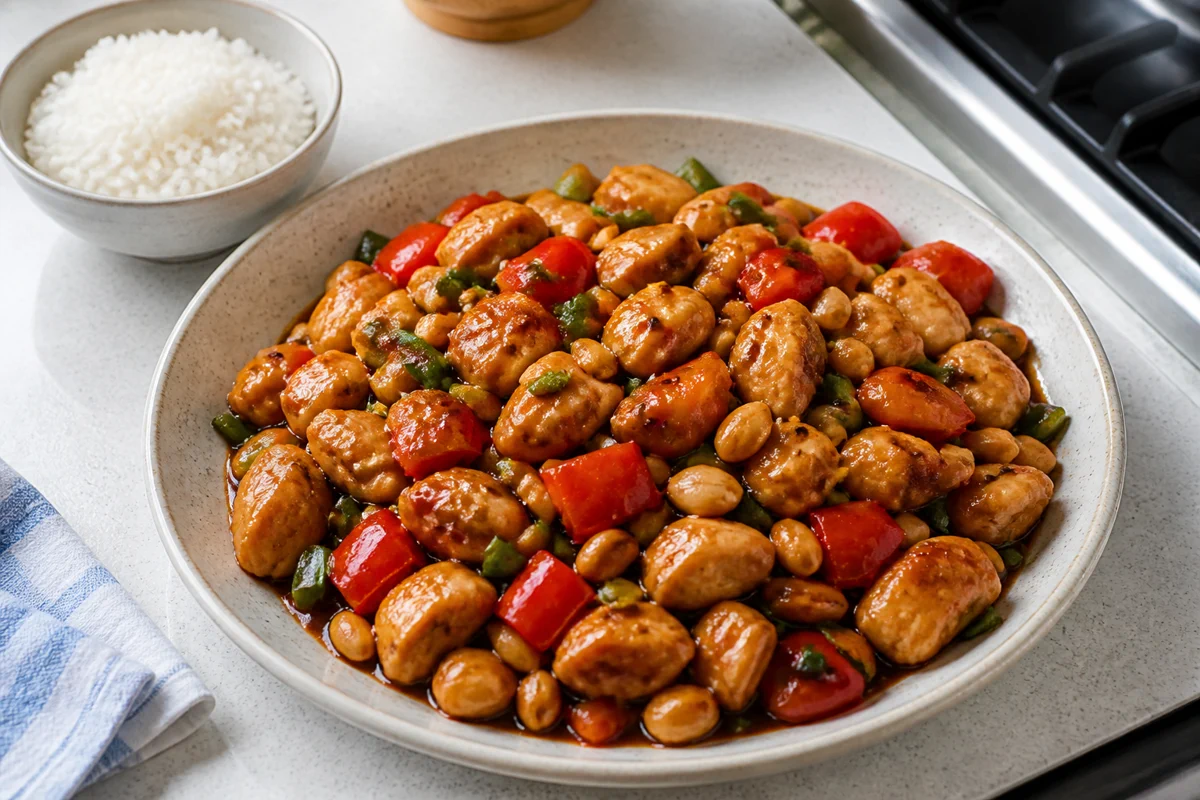
A Western-grocery-friendly kung pao chicken with peanuts, bell pepper, soy sauce, vinegar, and optional chili crisp.
Kung pao chicken is often associated with dried chilies and Sichuan peppercorn, but this version is adjusted for home cooks who want a reliable dinner from common Western grocery ingredients. Bell pepper gives color and crunch, while chili crisp can add controlled heat.
The key flavor is sweet, sour, salty, and nutty rather than aggressively spicy. Peanuts go in at the end so they keep texture, and a little cornstarch helps the sauce cling to the chicken.
It keeps the sweet-sour-savory shape of kung pao while using bell pepper and chili crisp instead of hard-to-find dried chilies.
Before You Start
Large skillet or wok, Small bowl, Spatula
- chicken
- peanuts
- bell pepper
- green onion
- garlic
- ginger
- Read all steps once before heating the pan, pot, or skillet. Chinese home cooking often moves quickly after the oil or broth is hot.
- Measure sauces, chop aromatics, and place ingredients near the stove before you start cooking.
- For stir-fries and skillet dishes, keep ingredients separated by cooking order so nothing overcooks while you look for the next item.
- If serving with rice, start the rice first so the hot topping is ready at the same time.
- Add spicy ingredients gradually if you are heat-sensitive; you can add more at the table.
Success check: The food should look glossy and hot, with vegetables still holding some texture instead of turning watery.
Ingredients
- chicken: 450 g / 1 lb.
- peanuts: 1/2 cup.
- bell pepper: 1 large.
- green onion: 3.
- garlic: 2 cloves.
- ginger: 1 tbsp grated.
- soy sauce: 3 tbsp.
- rice vinegar: 2 tbsp.
- sugar: 1 tbsp.
- cornstarch: 2 tsp.
- chili crisp: 1 to 2 tsp (optional).
- rice: Cooked rice, to serve (optional).
Steps
- Cut and coat the chicken
Cut the chicken into bite-size pieces that are roughly the same size. Toss them with part of the soy sauce, cornstarch, and a small spoon of oil. The coating should be thin and even, not a dry powdery crust.
- Prepare vegetables, peanuts, and sauce
Dice the bell pepper, slice the green onions, and mince the garlic and ginger. In a small bowl, stir soy sauce, vinegar, sugar, water, and chili crisp if using. Keep the peanuts separate so they stay crunchy until the end.
- Brown the chicken first
Heat a large skillet over medium-high heat with oil. Add the chicken in one layer and let it brown before stirring. Cook until the outside is golden and the pieces are nearly cooked through, about 4 to 5 minutes.
- Add vegetables and aromatics
Add the bell pepper, garlic, ginger, and the white parts of the green onion. Stir-fry for 1 to 2 minutes. The pepper should soften slightly but still look bright, and the garlic should smell fragrant without burning.
- Sauce the pan
Pour the prepared sauce into the hot pan and stir immediately. It should bubble and lightly thicken as it touches the cornstarch on the chicken. Scrape the bottom of the pan so the sauce picks up browned flavor.
- Finish with peanuts
Turn off the heat and fold in the peanuts and green onion tops. Taste one piece of chicken with sauce. Serve over rice right away so the peanuts keep their crunch and the sauce stays glossy.
Western Grocery Notes
- Roasted unsalted peanuts are easiest to control because soy sauce already adds salt.
- Bell pepper replaces dried chilies for a milder family-friendly version.
Substitutions
- Use cashews if peanuts are unavailable or unsuitable.
- Use chicken thigh for juicier pieces or firm tofu for a meat-free version.
- Use white wine vinegar or apple cider vinegar if rice vinegar is unavailable.
Ingredient Alternatives
-
Chicken
Cooks quickly and carries the glossy sauce.
Alternatives: Chicken thigh, Chicken breast, Firm tofu. Cut pieces evenly so they brown before the sauce thickens.
-
Peanuts
Add crunch and the classic nutty finish.
Alternatives: Cashews, Roasted almonds, Skip for a nut-free version. Use unsalted nuts if possible because soy sauce already adds salt.
-
Rice vinegar
Creates the sour side of the sauce.
Alternatives: White wine vinegar, Apple cider vinegar, Black vinegar. Black vinegar gives a deeper flavor if you have it, but rice vinegar is easier to find.
Cook Better Next Time
- Mix the sauce before heating the pan because stir-fry steps move quickly.
- Brown chicken in a single layer before stirring for better texture.
- Add peanuts after the sauce thickens so they do not become soft.
FAQ
- Is this kung pao chicken very spicy?
- No. It is mild by default and uses optional chili crisp so heat can be adjusted at the table.
- Can I make kung pao chicken without dried chilies?
- Yes. Bell pepper and optional chili crisp give an accessible home-kitchen version without dried chilies.
- What should I serve with kung pao chicken?
- Serve it with plain rice, garlic ginger fried rice, cucumber salad, or vinegar potato shreds.
Related Recipes
-
Garlic Ginger Fried Rice
A flexible fried rice for leftover rice, eggs, frozen vegetables, garlic, ginger, and soy sauce.
-
Chinese Cucumber Salad
A crisp, garlicky side dish with cucumber, rice vinegar, soy sauce, sesame oil, and optional chili crisp.
-
Vinegar Potato Shreds
A crisp-tender Chinese potato side with thin potato matchsticks, garlic, rice vinegar, green onion, and optional chili.
Recipe Collections
-
Easy Weeknight Chinese Recipes
Fast Chinese home-cooking ideas for busy nights, built around supermarket ingredients and simple pantry sauces.
-
High-Protein Chinese Dinners
Protein-focused Chinese dinner ideas using chicken, beef, tofu, eggs, pork, and practical meat-free alternatives.
-
Chinese Chicken Recipes
Chinese-style chicken recipes for Western kitchens, including stir-fries, fried rice, takeout-style sauces, and rice bowls.
-
Pantry-Friendly Chinese Recipes
Chinese recipes that lean on shelf-stable sauces, rice, noodles, eggs, frozen vegetables, and flexible substitutions.
-
Chinese Takeout at Home
Chinese takeout-style recipes adapted for home cooks using supermarket chicken, beef, noodles, vegetables, and practical pantry sauces.